Bubble Freedom
- 4.4
- Rating
- 10.00M
- Installs
- Free
- Price

 Analysis by App-foxy
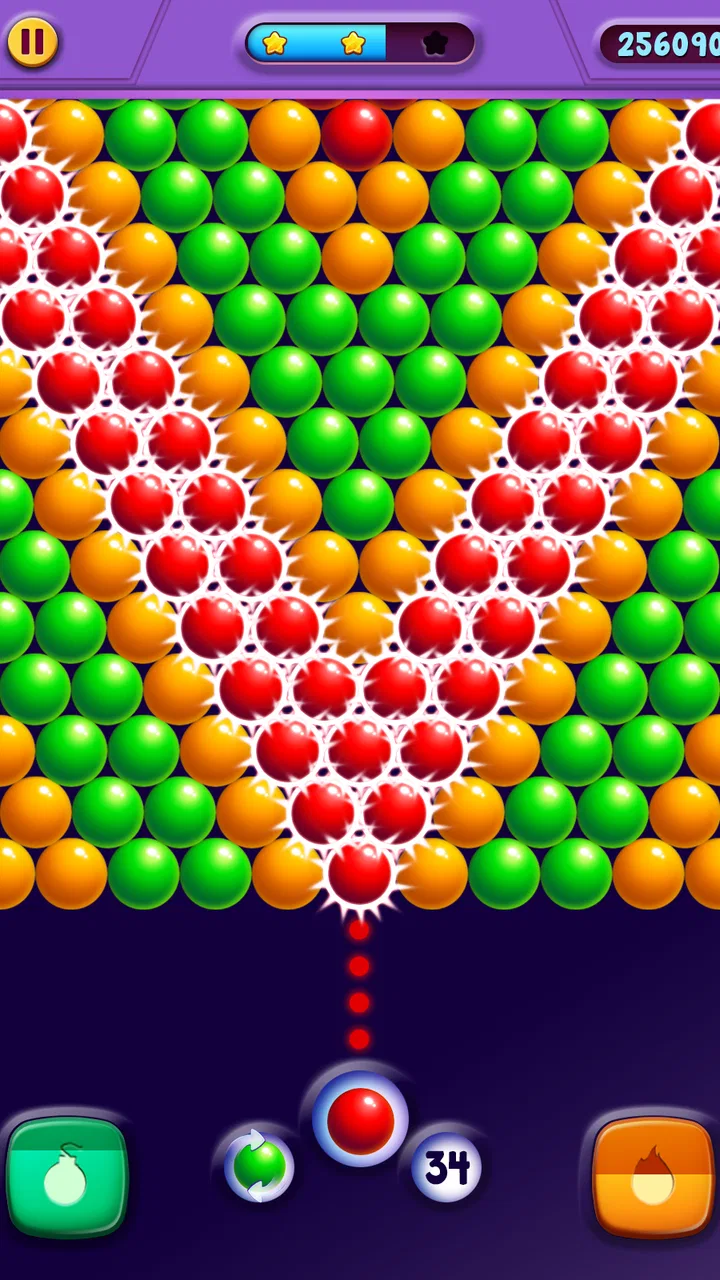
I spent time with Bubble Freedom as a light adventure game built around matching and popping colored bubbles. Its basic idea is easy to understand: line up at least three bubbles of the same color, clear the board, and use the resulting boosters or power-ups to push through the level. What surprised me is how quickly that simple loop can become a small planning exercise. The first stages feel relaxing, but later layouts ask me to think about order, space, and whether I should spend a helpful tool now or save it for a more awkward board.
That makes it a good fit for short breaks rather than a game I need to study before playing. I can open it while waiting for an appointment, play a few stages, and leave without losing the thread. At the same time, it is not only a mindless color-matching toy. The adventure framing gives the progress a little more purpose, while the changing bubble arrangements keep the central action from feeling completely flat.
How the current version feels to play
The current release is version 6.40, and the game remains free to download. Bubble Shooter Artworks is the developer behind it, and the title has reached more than ten million installs. Those figures suggest that it has found a broad audience, but my own impression is more specific: it works best for people who enjoy familiar puzzle rules with a gentle adventure wrapper and occasional moments of pressure.
You May Also Like

 Pandora - Music & Podcasts
Pandora’s Music Is Easy to Start, but Harder to Recover
Pandora’s strength is its low-effort path from a seed to a station. Its weak spot is how much confidence it asks you to place in connection, setup, and quiet recovery.

 AccuWeather: Weather Radar
AccuWeather Review: A Quick, Clear Forecast for Everyday Decisions
For everyday plans, the best forecast is the one you can understand quickly. AccuWeather makes rain timing, radar, and local conditions easy to act on, with a few trade-offs.

 Hill Climb Racing
Why Hill Climb Racing Still Turns Crashes Into One More Run
A tiny car, a bumpy hill and one more upgrade: Hill Climb Racing keeps resurfacing because its simple chaos makes every near-miss feel personal.

 AliExpress - Shopping App
AliExpress Makes Global Shopping Feel Personal, but Shoppers Bear the Risk
AliExpress turns a global marketplace into a pocket-sized discovery engine. Its reach is useful, its shopping loop compelling, and its trade-offs easy to miss.

 Lords Mobile: Kingdom Wars
Lords Mobile Is a Kingdom-Building Routine, Not a Quick Match
A case-by-case verdict on the building, battles, device demands, and social commitments that make Lords Mobile rewarding for some players and exhausting for others.

 PDF Scanner app - TapScanner
TapScanner Makes Paperwork Easier to Capture, Check, and Share
TapScanner makes scanning with a phone feel less like a rescue operation and more like a dependable step in getting work done. Its capture tools are useful, though not flawless.
More From Our News Desk
View All News


A typical round begins with a board full of colored bubbles and a clear objective. I look for groups that can be connected, decide which cluster will open the most useful space, and then make the shot or match. Clearing a small group may expose a larger opportunity, so the most satisfying turns are not always the biggest-looking ones. Sometimes the smart move is to remove a modest patch near the bottom or side because it changes the shape of everything above it.
The three-bubble rule keeps the entry point friendly. I do not need a complicated tutorial or a long explanation to understand what is happening. That accessibility also explains why the content rating is Everyone. Families can hand it to younger players who already understand color matching, although adults may still want to keep an eye on optional purchases rather than assuming every part of progression is cost-free.
The controls are suited to a phone. I can focus on one board at a time, make a quick decision, and continue without needing a large screen. That is important because this type of game lives or dies by how comfortable it feels in one hand. Bubble Freedom benefits from being visually direct: the colors and targets are the focus, not a crowded interface that makes the puzzle harder to read.
The small decisions that matter more than they first appear
My most useful habit was to stop firing at the first obvious group. Before making a move, I scan for bubbles that are supporting a larger section and consider whether removing them will cause several pieces to fall or open a new route. This is a simple technique, but it changes the game from constant tapping into short-term planning. It also helps conserve power-ups because I am less likely to use one merely to fix a move I could have avoided.
Another practical tip is to treat boosters as board-changing tools rather than emergency buttons. When a level looks manageable, I prefer to make ordinary matches first and wait until the remaining layout is cramped. A power-up used early may clear a few bubbles, while the same tool later can rescue a blocked area or create the space needed for a chain. The best timing depends on the board, but saving everything is not wise either; an unused booster cannot help me finish a difficult stage.
I also found it helpful to look beyond the color I am currently aiming at. A match can be attractive because it is available, yet a different color may be holding a larger group in place. This is one of the non-obvious strengths of the design: the game rewards reading the structure of the board, not simply reacting to the nearest match. Players who enjoy small tactical choices will probably get more from it than players who want every move to be automatic.
Where the adventure layer helps
The adventure category is a useful description because the game gives the puzzle loop a sense of moving through a sequence rather than repeating one isolated board forever. I like having a reason to continue after a successful stage. Even when the story or presentation is not the main attraction, the progression makes a short session feel more complete than a standalone color-matching exercise.
Still, I would not choose this game for a deep narrative. The real appeal is the board-solving, the gradual challenge, and the satisfaction of clearing a difficult arrangement. Anyone expecting a large exploration game, character development, or an elaborate adventure world should adjust those expectations. This is an adventure-flavored bubble puzzle, not a story-heavy journey.
That distinction matters when comparing it with common alternatives. A traditional match-three game usually gives me a grid and asks me to swap neighboring pieces. Bubble Freedom instead makes the placement and removal of colored bubbles the central concern. A standard bubble shooter may focus more narrowly on aiming a projectile toward a ceiling or cluster, while this title puts greater emphasis on clearing levels and using rewards or power-ups as part of progression. The difference is subtle for a newcomer, but noticeable after several sessions: I spend more time thinking about what a cleared area will reveal next.
What the long-term numbers mean for a new player
The game holds an average rating of 4.4 from roughly one hundred twenty thousand ratings, alongside about nine thousand two hundred written reviews. I would not treat those figures as a guarantee that every player will enjoy it, but they do indicate that the basic format has connected with a substantial audience. For me, the strongest reason to try it is not popularity; it is that the rules become useful almost immediately and the sessions can remain short.
It is also free, which lowers the risk of testing it. The important qualification is that optional in-app purchases range from $0.99 to $99.99 per item. That wide range is worth keeping in mind before handing the phone to a child or allowing impulse spending. I can play without treating a purchase as part of the basic introduction, but players who dislike any pressure around boosters, retries, or progression should approach the game carefully and use the device’s purchase controls.
I would recommend it to someone who wants a colorful puzzle for commuting, waiting rooms, or a few minutes before bed. It is especially suitable for players who like recognizable rules but still want occasional tactical choices. I would skip it if I need a completely skill-pure experience with no optional spending at all, or if I want a substantial adventure story. A minimalist puzzle app may be better for the first preference, while a dedicated narrative adventure is a stronger match for the second.
How the version history affects the experience
The release date goes back to December 7, 2017, so this is not a brand-new experiment looking for its identity. The current version shows an established product that has continued as a recognizable bubble-popping game rather than disappearing after a brief launch period. That maturity is useful for someone deciding whether to try it now: the core concept is proven, familiar, and easy to evaluate within a short session.
At the same time, I would separate what is visible today from what I might hope to see later. Version 6.40 tells me which build I would be using now, but it does not promise a particular future feature or redesign. I would watch for changes that improve the balance between ordinary play and power-up use, make progression feel less repetitive, or give experienced players fresh reasons to revisit earlier stages. Those would matter more to me than cosmetic adjustments alone.
For existing players, the current state is likely most valuable when the game is treated as a dependable casual routine. Someone who enjoyed the original three-color matching idea can still recognize the appeal years after the initial release. The trade-off is that a long-running format may feel conservative. If I have already played many similar bubble games, the basic action may not feel revolutionary, even when the level arrangement gives it a slightly different rhythm.
Friction that becomes clearer after repeated sessions
The biggest limitation is inherent to the format: matching colored bubbles can become familiar quickly. The first few rounds benefit from immediate clarity, but that same simplicity can make longer sessions feel repetitive. I prefer playing in short bursts because the loop remains pleasant when I leave before it turns into a chore. Anyone looking for a game that constantly introduces new systems may find the central action too narrow.
Power-ups are another point of balance. They add welcome drama when a board seems stuck, but they can also change how I judge a level. If I rely on them too often, I lose the satisfaction of solving the arrangement through positioning and timing. My approach is to attempt a board normally, identify the exact obstacle that is stopping progress, and then use the smallest helpful boost rather than activating everything at once.
The free-to-play structure also creates a personal choice about patience. A player who is comfortable retrying, waiting, or accepting a slower rhythm may enjoy the game without spending. Someone who wants every difficult stage resolved immediately may feel tempted by the purchase range. That does not make the game unsuitable, but it means the best experience depends partly on self-control and on whether the player sees optional items as occasional conveniences or necessary tools.
Device compatibility is relatively approachable because the minimum operating system is Android 5.1. That makes the game accessible to people using older Android hardware, although actual comfort still depends on the phone’s screen, performance, and battery condition. I would not choose a device solely from the operating-system requirement, but it is reassuring for anyone who does not own a recent handset.
Everyday scenarios where it fits—and where it does not
Imagine I am on a train with ten minutes before my stop. I can play a handful of stages, pause when the train arrives, and return later without needing to remember a complicated plot or a large inventory. If one board is awkward, I can use the earlier planning habits—clear the supporting bubbles, protect open space, and reserve a booster for the bottleneck—rather than rushing through random matches.
It also works during a short break from desk work because the visual task is different from reading or typing. I can focus on the colors for a few minutes and then put the phone away. I would avoid using it when I need uninterrupted concentration, though. The “just one more level” structure can easily turn a small break into a longer one, particularly when a near-complete board makes me want another attempt.
For a child, the simple rules and Everyone rating are approachable, but I would still introduce the game with a clear conversation about purchases. For an older player who wants a relaxed pastime, the large, readable matching concept may be more inviting than a fast action game. For a competitive puzzle fan who wants leaderboards, complex combos, or constant strategic escalation, a more demanding match-three or tactical title may offer greater depth.
What I would watch before committing long term
If I were deciding whether to keep Bubble Freedom installed for months, I would pay attention to three things. First, do new levels continue to make me rethink the board, or am I repeating the same solution pattern? Second, can I maintain progress without feeling that a purchase is the expected answer to difficulty? Third, do the boosters remain occasional helpers rather than becoming the main way to play?
Those questions are more useful than simply counting how many stages I complete. The game’s strongest quality is the clean relationship between a visible puzzle and a satisfying clear. Its weakest point is the possibility that the same relationship becomes predictable. A healthy balance would preserve the approachable bubble action while giving returning players enough variation to justify another session.
My final view is positive but specific. Bubble Freedom is a friendly, free adventure puzzle that I would recommend to someone who wants quick bubble-matching sessions, clear objectives, and light tactical planning. It is not the right choice for a deep narrative, a completely purchase-free environment, or endlessly changing mechanics. Used in short sessions and played with a deliberate approach to boosters, it gives me exactly what a casual phone game should: an easy start, a few satisfying decisions, and a reason to try one more board without demanding my whole evening.
FAQs for Bubble Freedom
01What is Bubble Freedom and how does the game work?
Bubble Freedom is a casual bubble-shooting puzzle game in which you aim and launch colored bubbles to match groups of the same color. Creating combinations clears bubbles from the board and helps you complete each level. The game is designed for short, relaxing sessions, although later stages may require more careful planning, accurate aiming, and efficient use of available shots.
02Is Bubble Freedom free to download and play?
Bubble Freedom can generally be downloaded and played without an upfront purchase, making it accessible to users who want a casual puzzle game. However, the exact monetization model may vary by platform or version. You may encounter advertisements, optional purchases, or other in-game offers. It is worth checking the store listing and purchase settings before downloading, especially on a shared device.
03Does Bubble Freedom require an internet connection?
Many bubble-shooter levels can usually be played offline once the game is installed, which makes Bubble Freedom convenient for travel or areas with limited connectivity. Nevertheless, an internet connection may be needed for advertisements, updates, cloud-related features, rankings, or in-app purchases. Offline availability can also differ between versions, so test the game before relying on it without mobile data.
04Is Bubble Freedom suitable for children and family play?
Bubble Freedom uses simple matching mechanics that are generally easy for children and beginners to understand, while aiming and level objectives can provide a modest challenge. Parents should still review the app’s age rating, advertising content, privacy information, and any purchase options. If children use the device, enabling parental controls and requiring authorization for purchases is a sensible precaution.
05What should I check before installing Bubble Freedom on Android or iOS?
Before installing Bubble Freedom, check that your device meets the operating-system requirements and has enough free storage for the app and future updates. Also review the latest user ratings, permissions, privacy policy, advertising approach, and whether progress is saved through an account or only locally. These details can affect compatibility, data usage, and whether your progress remains available after reinstalling.
Pros
- Simple bubble-shooting controls are easy for beginners to learn.
- Short levels make it convenient for quick gaming sessions.
- Colorful visuals give the game a cheerful
- accessible presentation.
- Offline play is useful when no mobile connection is available.
- Gradually increasing challenges help maintain interest over time.
Cons
- Frequent repetition may make the gameplay feel predictable.
- Some levels can depend heavily on favorable bubble layouts.
- The game may become difficult without careful planning and patience.
- Ads can interrupt play
- depending on the version and device.
- Limited variety may not satisfy players seeking deeper game modes.

Bubble Freedom
Gallery